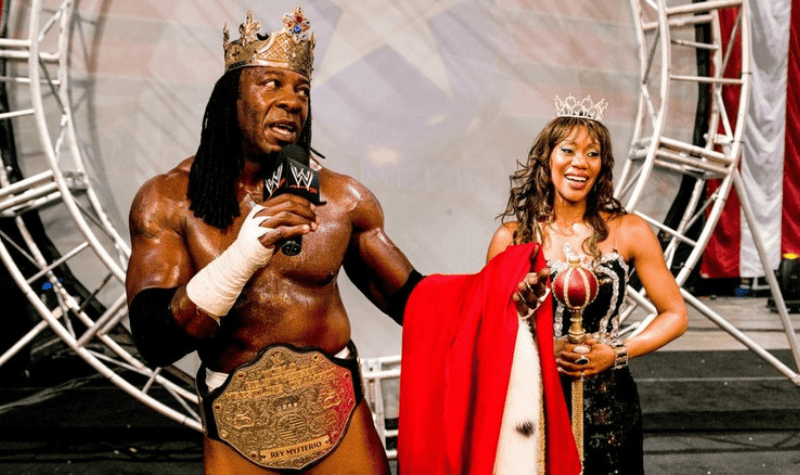

Professional wrestling has always been more than scripted entertainment. It is theater, athleticism, branding, and cultural storytelling wrapped into one spectacle. And within the global empire that is WWE, Black wrestlers have played a critical role in shaping its evolution — even when recognition lagged behind impact.
WWE (formerly the World Wrestling Federation) has grown into a multibillion-dollar global brand. According to WWE’s corporate reports, the company generated over $1 billion in annual revenue for the first time in 2022. With weekly programming reaching more than 180 countries, representation inside the squared circle carries global cultural weight.
For decades, Black wrestlers navigated limited character archetypes, racial stereotypes, and booking ceilings. Yet many broke through those barriers — becoming world champions, crossover stars, and generational inspirations. This article explores the most influential Black wrestlers in WWE history, examining their legacy, their championships, and the doors they opened.
The Early Trailblazers (1980s–1990s): Breaking the Stereotype Mold
In the 1980s and early 1990s, WWE’s portrayal of Black wrestlers often leaned heavily on caricature. Despite this, several athletes carved out undeniable legacies.
Junkyard Dog
Although his biggest success came in Mid-South Wrestling, Junkyard Dog (JYD) became one of the first Black wrestling megastars to gain national recognition in the early 1980s. When he joined WWF (now WWE) in 1984, he brought massive crowd reactions with him.
At a time when representation was scarce, JYD’s charisma and connection with fans demonstrated that Black wrestlers could headline arenas and sell merchandise.
Rocky Johnson
In 1983, Rocky Johnson and Tony Atlas became the first Black tag team to win the WWF Tag Team Championship. Known as The Soul Patrol, their victory marked a historic milestone for representation in WWE’s championship lineage.
Johnson’s legacy extends beyond his in-ring accomplishments — he is the father of Dwayne “The Rock” Johnson, one of the biggest stars in wrestling history.
Tony Atlas
Atlas was not only a champion but also one of the earliest Black bodybuilders to gain mainstream wrestling attention. His presence in the early 1980s helped challenge perceptions of marketability.
The Attitude Era (Late 1990s–Early 2000s): Cultural Shift
The late 1990s marked WWE’s “Attitude Era,” characterized by edgier content and intense competition with WCW. This era expanded opportunities — though challenges remained.
Booker T
Few wrestlers embody influence like Booker T. After WWE acquired WCW in 2001, Booker T transitioned into the company and eventually became a multi-time world champion.
He won the World Heavyweight Championship in 2006, becoming one of the few Black wrestlers to hold a recognized world title in WWE’s modern era. Booker T is also a six-time world champion across major promotions.
Beyond championships, his longevity and post-retirement commentary role cemented him as a respected voice in wrestling.
Mark Henry
Known as “The World’s Strongest Man,” Mark Henry joined WWE in 1996 after competing in the Olympics. His 2011 “Hall of Pain” run culminated in winning the World Heavyweight Championship.
Henry’s 25-year tenure and eventual induction into the WWE Hall of Fame in 2018 highlight his impact on representation and perseverance.
The Modern Era (2010s): Breaking the Glass Ceiling
By the 2010s, fan expectations shifted toward merit-based storytelling and diverse champions.
Kofi Kingston
In 2019, at WrestleMania 35, Kofi Kingston defeated Daniel Bryan to win the WWE Championship — marking the first time a fully recognized Black WWE Champion was crowned in a one-on-one WrestleMania main event moment.
The “KofiMania” storyline became a cultural phenomenon, symbolizing long-overdue recognition for Black wrestlers.
Bobby Lashley
In 2021, Bobby Lashley captured the WWE Championship during the pandemic era. His reign reestablished him as a dominant force and expanded representation at the top of the card.
Big E
Big E cashed in his Money in the Bank contract in 2021 to win the WWE Championship, becoming another Black world champion in the modern era.
The Women Who Changed the Game
Black women in WWE have historically faced double barriers — race and gender. In recent years, several have redefined what main-event status looks like.
Jacqueline
A two-time Women’s Champion in the late 1990s, Jacqueline became one of the first Black female champions in WWE history and was inducted into the Hall of Fame in 2016.
Naomi
Naomi’s neon-lit entrance and athleticism helped her stand out. She became a two-time SmackDown Women’s Champion in 2017.
Bianca Belair
Bianca Belair made history in 2021 by main-eventing WrestleMania 37 against Sasha Banks — the first WrestleMania main event featuring two Black women. She won the SmackDown Women’s Championship that night.
The image of two Black women headlining WWE’s biggest annual event represented generational progress.
Sasha Banks
A multi-time women’s champion, Sasha Banks (now Mercedes Moné) became one of the most decorated female wrestlers of her era.
The Cultural Impact of Black Wrestlers in WWE
Wrestling characters influence language, fashion, and global branding. Black wrestlers have contributed catchphrases, entrance music trends, and merchandise innovations.
Representation in WWE also carries economic implications. WWE’s global distribution means Black champions are seen by millions worldwide — reshaping global perceptions of Black athleticism and leadership.
Why Influence Matters Beyond Championships
Influence is not measured solely in title reigns. It includes:
- Main-event positioning
- Merchandise sales
- Longevity
- Cultural crossover success
Figures like Dwayne “The Rock” Johnson transcended wrestling to become global Hollywood icons.
Conclusion: Legacy, Visibility, and the Road Ahead
The most influential Black wrestlers in WWE history did more than win matches. They expanded possibility. They shifted audience expectations. They forced institutions to evolve.
From Rocky Johnson’s 1983 tag title breakthrough to Bianca Belair’s WrestleMania main event moment nearly four decades later, progress has been measurable — though not always linear.
Call to Action: Revisit a historic match. Watch KofiMania. Study the Soul Patrol’s breakthrough. Support today’s rising Black talent in WWE’s developmental systems. Because influence grows when history is remembered — and when the next generation sees themselves in the spotlight.